Day of the Dead in Mexico City 2026
5 Experiences You Shouldn’t Miss From Coyoacán’s traditional altars to the Reforma parade and the community celebrations of Mixquic.

Table of Contents
If there’s one time of year when Mexico City is especially worth visiting, it’s during Day of the Dead.
During these days, the city transforms with marigold flowers, papel picado, Catrinas, candles, music, and altars. But behind all the colorful decorations is something much more meaningful: a celebration of memory and the people who are no longer with us.
For travelers from the United States, Canada, Europe, and other parts of the world, Day of the Dead in Mexico City can be one of the most memorable cultural experiences you can have in Mexico.
And if you’re Mexican and simply passing through Mexico City before heading to the beach, it’s also a great opportunity to experience a different side of the capital.
What I love about experiencing Día de Muertos or Day of the Dead in Mexico City is that there isn’t just one way to celebrate. You’ll find spectacular parades and monumental installations in the heart of the city, but also neighborhood celebrations and community traditions that have been passed down through generations.
These are five experiences I would choose if you want to experience Day of the Dead in Mexico City in 2026.
Walk around Coyoacán and discover its Day of the Dead altars
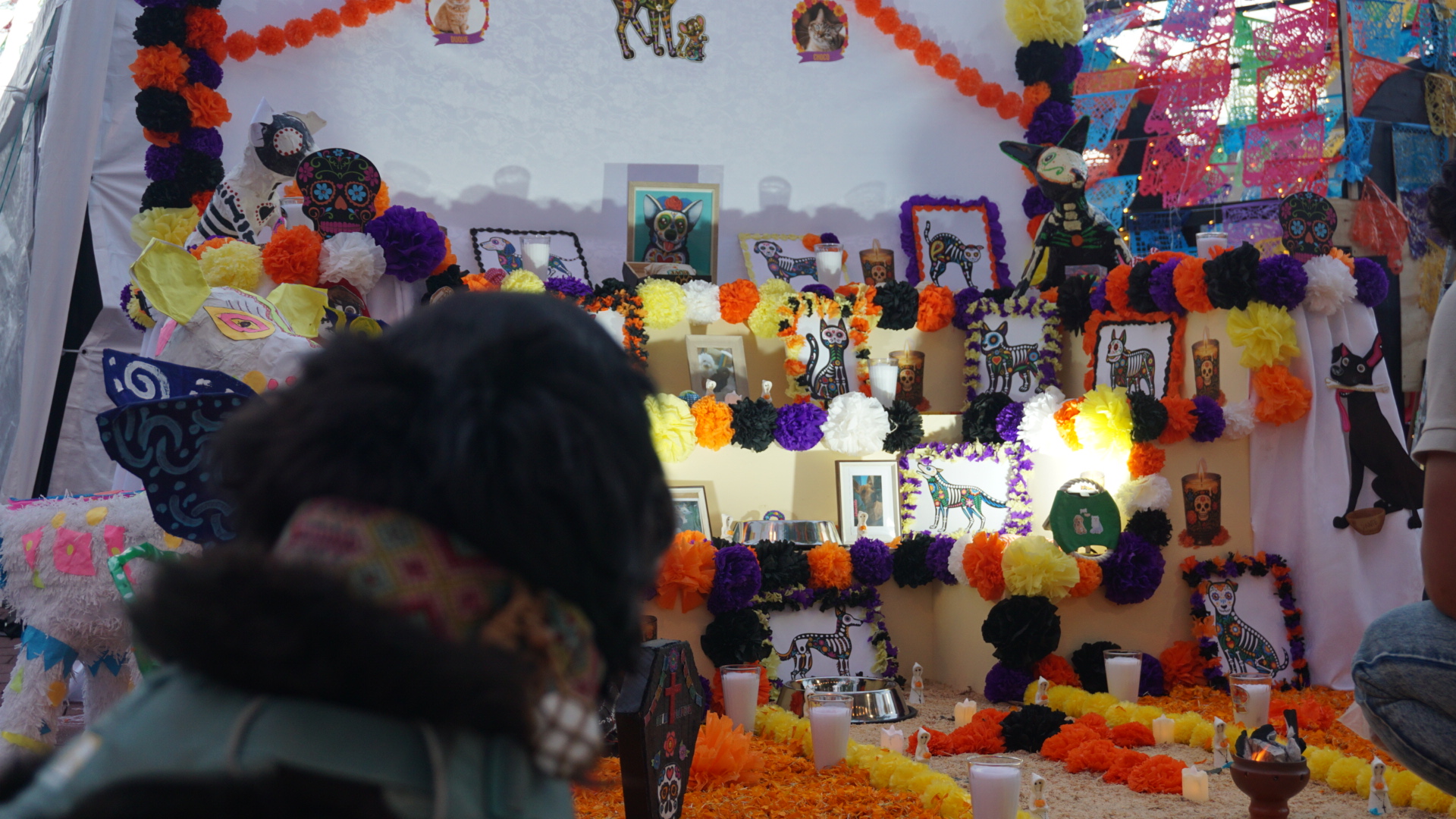
If this is your first time experiencing Day of the Dead in Mexico City, Coyoacán would be one of my first recommendations.
The historic center of Coyoacán has a special atmosphere during this time of year. You can walk through Jardín Hidalgo and Jardín Centenario, explore the surrounding streets, and discover seasonal altars and decorations.
Coyoacán also typically has a special cultural program around Day of the Dead. In previous years, the neighborhood has hosted monumental altars, exhibitions, concerts, Catrina events, and other cultural activities.
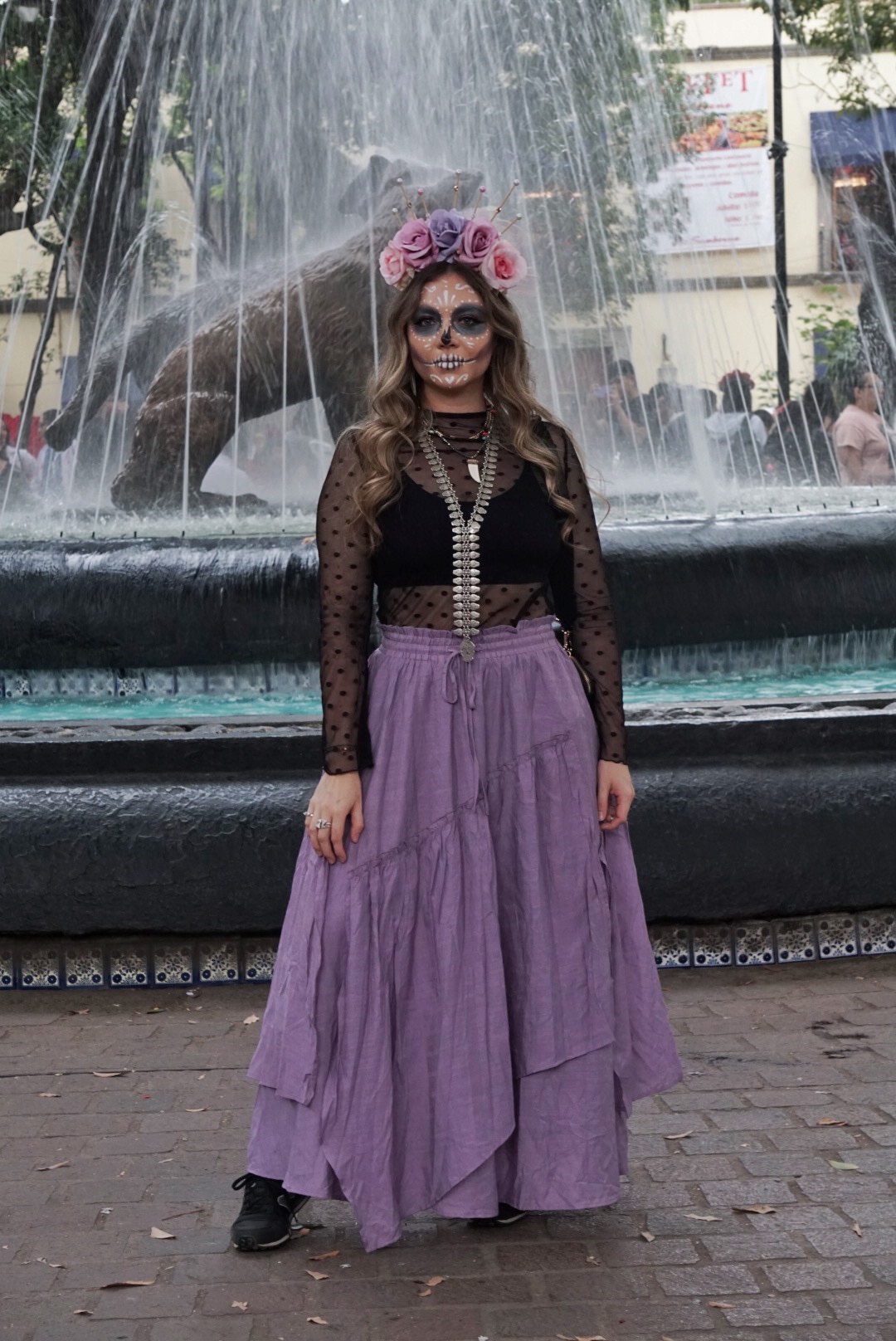
For 2026, I recommend checking the official Coyoacán schedule before visiting, since specific installations and activities can change from year to year.
Don’t leave Coyoacán without eating something
One of the reasons I like recommending Coyoacán is that you can easily turn your visit into a half-day experience.
After exploring the altars, walk through the Mercado de Coyoacán, look for Mexican food, stop for coffee or hot chocolate, and, of course, try some pan de muerto, the traditional Day of the Dead bread.
During this season, you’ll find different versions, from traditional sugar-coated bread to filled varieties and seasonal creations.
If you’re vegetarian or simply prefer plant-based food, Coyoacán also has plenty of options, so you don’t have to miss out on the Mexican food experience.
Top 5 Restaurants in Coyoacán, Mexico City: Where to Eat
What if you’re traveling with your dog?
Coyoacán can be a good area for walking with your dog, particularly around open public spaces and some pet-friendly terraces.
However, not every business or event allows pets, so always check before entering.
If you’re traveling with your dog, I would avoid the busiest areas during peak hours and remember that cultural celebrations should be enjoyed respectfully.
My tip: Arrive early, explore Coyoacán without rushing, and stay until the evening if you can. The atmosphere changes completely once the streets and altars begin to light up.
Experience the Day of the Dead Parade along Paseo de la Reforma
If you want to experience the spectacular side of Day of the Dead in Mexico City, the Grand Day of the Dead Parade is one of the main events to consider.
The parade is a relatively contemporary celebration that combines elements of Mexican culture with music, dance, floats, giant figures, and characters inspired by Mexican traditions and mythology.
In 2026, the parade is scheduled for October 31 and will travel along Paseo de la Reforma toward the Historic Center. The official program includes different groups, floats, and elements inspired by Mexican cultural symbols.
For a first-time visitor, this is probably one of the easiest Day of the Dead experiences to recommend because it brings together many of the visual elements that have become internationally associated with the celebration.
But there’s an important distinction worth understanding.
The parade does not represent the entirety of Mexico’s Day of the Dead traditions. It is a contemporary public celebration designed to showcase different aspects of Mexican culture.
That’s why, if you have several days in Mexico City, I would combine the parade with something more traditional, such as Coyoacán or Mixquic.
Tips for enjoying the parade
Don’t expect to casually stroll down Reforma while the parade passes. Popular areas can become extremely crowded.
If you want a more comfortable experience, check the route beforehand, arrive early, and keep in mind that road closures can affect transportation.
And if you’re traveling with a dog, I would personally choose another activity during the parade. Large crowds, loud music, and limited space can be stressful for many dogs.
Visit the Monumental Day of the Dead Ofrenda in the Zócalo
After experiencing Reforma, head toward the Historic Center to see another major part of Day of the Dead in Mexico City: the Monumental Ofrenda in the Zócalo.
The Zócalo installation has become one of the most recognizable images of the season and is especially worth visiting if this is your first time in Mexico City.
For 2026, the official program includes a large Day of the Dead altar in the Zócalo, with a concept dedicated to La Catrina and monumental elements made from traditional Mexican cartonería, along with marigold flowers and sawdust carpets.
Rather than simply arriving, taking a photo, and leaving, take a few minutes to look closely at the details.
The flowers, candles, photographs, papel picado, and food are not simply decorations. They are part of a tradition centered around memory and remembrance.
A good Historic Center itinerary
You can easily combine several attractions in this area:
Zócalo → Metropolitan Cathedral → Historic Center → Palacio de Bellas Artes
Depending on how much time you have, finish with lunch, coffee, or a drink before heading back to your accommodation.
This area can get extremely busy during the main celebration dates, so if you prefer a quieter experience, try visiting earlier in the day.

Discover UNAM’s Day of the Dead Mega Ofrenda
For something a little different, I would include the UNAM Mega Ofrenda.
The National Autonomous University of Mexico organizes its annual University Day of the Dead Festival, bringing together altar designs created by members of the university community.
The 2026 edition is the 29th University Day of the Dead Festival, dedicated to the trajectories and people who have helped shape the university’s history as part of its 475th anniversary celebrations.
The event is scheduled for October 31, November 1, and November 2.
I particularly like this experience because it presents a more artistic and contemporary interpretation of the tradition.
You’ll find altars with different concepts, materials, themes, and ways of interpreting death and remembrance.
It’s also a good option for millennial travelers who enjoy art, photography, architecture, and cultural experiences that feel a little less conventional.
If you have extra time, you can also explore other parts of Ciudad Universitaria while you’re there.
Important: Check the official UNAM information before going, as access details, schedules, and specific locations can change.
Visit San Andrés Mixquic for a more traditional Day of the Dead experience
If the large installations and parades feel too touristy for you and you want to experience a more community-centered celebration, consider taking a trip to San Andrés Mixquic, in the Tláhuac borough of Mexico City.
Mixquic is one of the capital’s best-known places to experience Day of the Dead through deeply rooted local traditions.
During these dates, visitors come to experience celebrations around the town’s religious spaces and cemetery. One of the most well-known moments is the Alumbrada, when graves are illuminated by candles as families remember their loved ones.
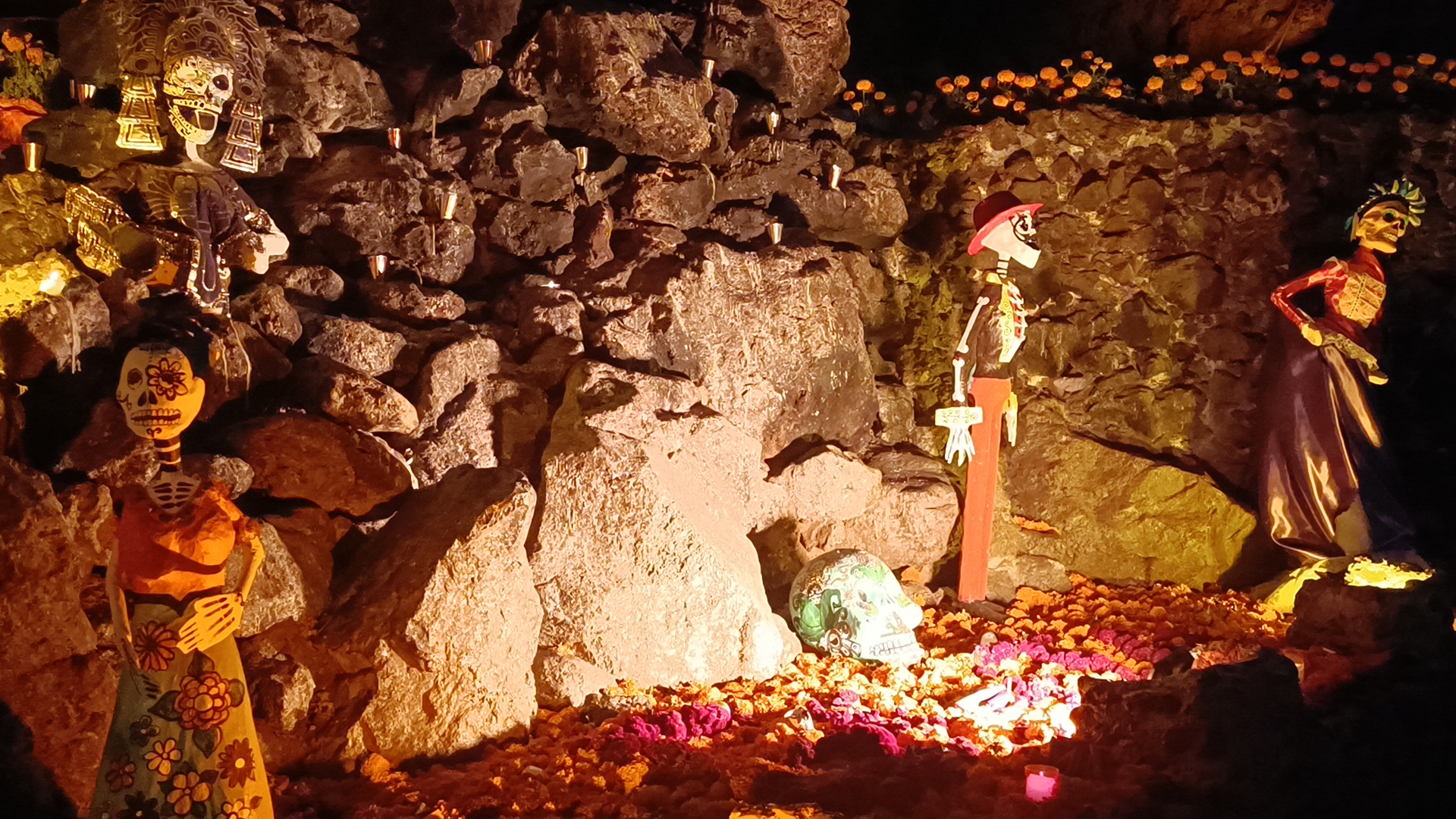
The Mixquic celebration is scheduled for October 31 through November 2.
This is an experience that requires a little more planning than visiting Coyoacán or the Zócalo.
I also want to make one important recommendation: don’t go simply looking for pretty photographs.
Cemeteries are places of remembrance, and families are there to honor people they love. Observe, learn, and be respectful. Ask before photographing people, and never touch or interfere with an altar or family ceremony.
If you genuinely want to understand the meaning behind Day of the Dead, this can be one of the most meaningful experiences on this list.
Which Day of the Dead experience in Mexico City should you choose?
If you only have one or two days, I wouldn’t try to do all five.
For a first visit, I would choose Coyoacán + Zócalo + Reforma.
If you have more time, add the UNAM Mega Ofrenda.
And if you really want to experience a more traditional, community-based celebration, set aside a day for Mixquic.
The interesting thing is that each experience shows you a different side of the celebration:
Coyoacán: neighborhood culture, traditions, food, and local atmosphere.
Reforma: spectacle and contemporary celebration.
Zócalo: monumental art and one of the city’s largest installations.
UNAM: creativity, art, and university culture.
Mixquic: memory, community, and tradition.
That’s what makes Day of the Dead in Mexico City so interesting: there isn’t just one way to experience it.
What to eat during Day of the Dead in Mexico City
A Day of the Dead trip to Mexico wouldn’t be complete without talking about food.
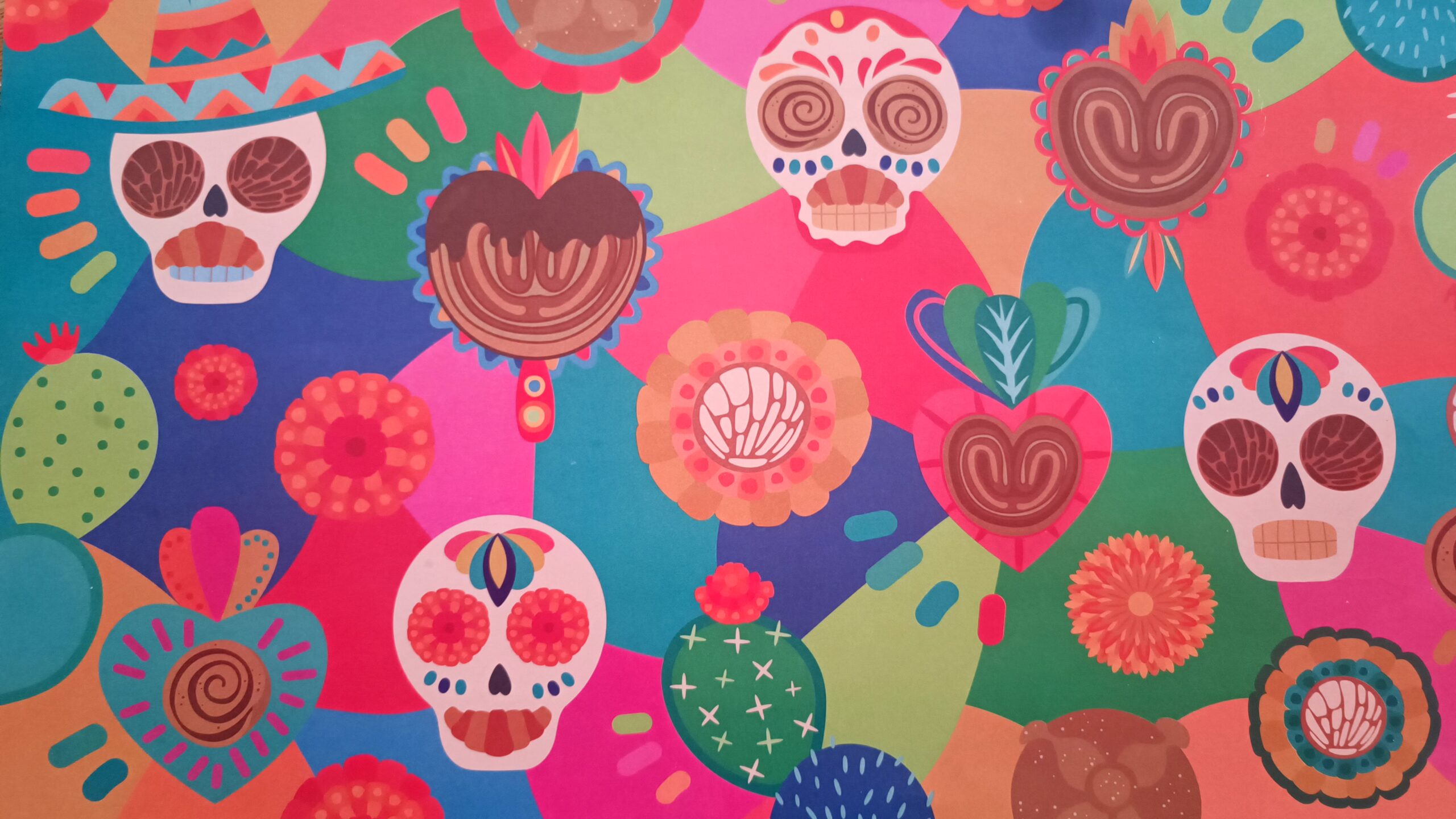
During this season, you’ll find pan de muerto throughout the city. Look for a local bakery and try a traditional version, but don’t be afraid to explore some of the creative variations that appear every year.
Traditional pan de muerto is usually flavored with citrus or orange blossom and topped with sugar. The strips of dough across the top represent bones.
You can also look for hot chocolate, coffee, tamales, and other Mexican foods that are popular during the season.
If you’re vegetarian, you absolutely don’t have to miss out on the food experience. Mexico City has an extensive vegetarian and vegan restaurant scene, particularly in neighborhoods such as Coyoacán, Roma, Condesa, and the Historic Center.
Is Mexico City dog friendly during Day of the Dead?
It can be, but you’ll need to choose your activities carefully.
Mexico City has an increasing number of dog-friendly restaurants, cafés, parks, and terraces, but that doesn’t mean dogs are allowed at every Day of the Dead event.
For a more relaxed day with your dog, I would choose a walk around Coyoacán and a pet-friendly terrace rather than taking your dog to a packed parade.
At events such as the Reforma parade or in some parts of the Historic Center, large crowds, noise, and limited space can be overwhelming for some dogs.
And remember: just because an event is outdoors doesn’t automatically mean dogs are allowed.
Always check the venue’s current pet policy before going.
Tips for visiting Mexico City during Day of the Dead
Book your accommodation early
Day of the Dead is one of the most popular times to visit Mexico City, particularly for international travelers. If you already know your dates, book your accommodation in advance.
Use public transportation when it makes sense
During the parade and major events, streets can be closed and traffic can become complicated. The Metro, Metrobús, and other public transportation options may be more practical than driving.
Wear comfortable shoes
You’re going to walk a lot. Between Coyoacán, the Historic Center, and Reforma, you can easily spend several hours on foot.
Bring a light jacket
Afternoons can be pleasant, but Mexico City evenings in autumn can feel considerably cooler than the weather in the Riviera Maya.
Respect the altars
An altar is not simply a decoration for photographs. It represents the memory of a person, family, or community.
Don’t touch flowers, food, candles, or other objects placed on an altar, and ask permission before photographing people.
Don’t try to see everything
My biggest piece of advice: leave room to actually enjoy the city.
Day of the Dead in Mexico City can easily turn into an endless list of events. You don’t need to attend all of them. Choose the experiences that genuinely interest you and leave some time to enjoy the city in between.
Plan Your Trip to Mexico City
Find your accommodation
If you’re planning to visit Mexico City for Day of the Dead, compare hotels and accommodations to find a location that makes it easy to explore Coyoacán, Reforma, and the Historic Center.
Find accommodation with Expedia:
My fav spots to stay in Mexico City
Stay connected during your trip
If you’re visiting from the United States, Canada, Europe, or another country, an eSIM can be a convenient way to use maps, order transportation, find restaurants, check schedules, and stay connected while traveling.
Explore Holafly eSIM options
Code: CHRISTELLEPATTYou can use my link to check the available plans and choose the option that works best for your trip. You don’t need to be traveling from a specific country to use the link; any traveler who needs an eSIM can check the available options.
Traveling to the Mexican Caribbean? Book your activities with me
If you’re continuing your trip toward the Riviera Maya after Mexico City, I can also help you book experiences at Río Secreto or Atik.
You can message me directly on WhatsApp to ask about availability, options, and booking details.
Contact me on WhatsApp:
Book Río Secreto or Atik via WhatsApp
One more reason to visit Mexico City for Day of the Dead
Day of the Dead isn’t just a season of Catrinas, orange flowers, and beautiful photographs.
It’s a celebration about memory and the way different communities understand death, family, and remembrance.
So if you’re visiting Mexico City during this time, try to do more than attend the parade.
Walk through Coyoacán. Take your time looking at an altar. Try pan de muerto. Visit a market. Listen to local stories. And, if you have the opportunity, experience a community celebration such as Mixquic.
Because that may be the part of Day of the Dead in Mexico City that stays with you long after the trip is over.